Solar Panels for Homes in Ireland
· by Dominic Ó Gallachóir
How Much Money Will I Save With Solar Panels?
Move the slider to see how solar panels impact a typical houshold electricity bill. The key takeaway is that more panels = bigger savings. With enough panels, some housholds manage to totally eliminate their bills or even get a payment from their electricity supplier.
But what about the inverter limit, isn't that the bottleneck?
Most Irish homes are limited to a 5.5 kW inverter, so you might think there's no point installing more than that quantity of panels, believing the inverter will just "clip" the extra away.
Analysis of Met Éireann weather data carried out by kilowatt.ie shows the opposite. On typical Irish days, the panels are the bottleneck, not the inverter. Doubling the panels from 6 kW to 12 kW doubles the electricity generated on an overcast day. And even on a sunny day a 12 kW system out-produces a 6 kW one (on the same 5.5 kW inverter) by about a third despite clipping.
Even 16+ kW of panels can make sense on a 5.5 kW inverter, especially if you have a battery which can absorb some of the midday surplus.
What will solar panels cost you?
Rough prices (solar only)
Actual installation cost varies massively depending on the roof type, equipment quality, and many other factors.
| System | Panels | Installed cost | After €1,800 SEAI grant |
|---|---|---|---|
| 5.4 kW | 12 | ~€6,925 | ~€5,125 |
| 7.2 kW | 16 | ~€8,545 | ~€6,745 |
| 8.1 kW | 18 | ~€9,355 | ~€7,555 |
Popular add-ons
- Hybrid inverter Battery-compatible inverter for future-proofing ~€600
- 10 kWh battery Shift your electricity imports to cheaper off-peak hours ~€3,000
- Whole-home blackout protection Keep the lights on through power outages ~€1,000
- Hot water power diverter Use surplus solar energy to heat your water ~€550
Incentives for solar panel installation
Tax breaks and subsidies favour home solar panel installations in Ireland
€1,800 SEAI grant
Home built before 2021? You can claim €1,800 towards the cost of installation from the Sustainable Energy Authority of Ireland.
0% VAT
Panels, inverters and batteries have been VAT-free since April 2023: over €1,000 off a typical job.
Tax-free export income
Up to €400 per person per year tax-free: That's €800 per household per year if you have two names on the electricity bill.
How to get the SEAI grant, step by step
-
Check you're eligible
The home must have been built before 2021. The SEAI define the date of construction as when the electricity meter was installed.
-
Find an installer and agree on the system details
Make sure the grant offer is in place before installation starts. Once issued, the offer is valid for eight months, so the installation has to happen inside that window.
-
Installer notifies ESB Networks (NC6)
Every microgeneration system must be registered with ESB Networks before it is connected. You won't get any export payments until this registration has been processed, so make sure your installer does this in good time.
-
The installation itself
Scaffolding, panels, inverter, battery if you're having one, and a smart meter or export meter fitted if your home doesn't already have one.
-
Book the post-installation BER assessment
SEAI require a post-works BER from a registered assessor before paying the grant. This is sometimes arranged by the installer, but not always. -
Installer submits documents to the SEAI for grant payment
Your installer sends a range of documents to the SEAI. Grant payment usually follows a few weeks later. The SEAI conducts additional inspections to ensure standards are followed for a minority of homes, selected at random.
See the SEAI website for full grant details.
Do you need planning permission for solar panels?
Solar panels on the roof of a home are generally exempt from planning permission requirements in Ireland. Since 2022, the exemption applies regardless of the panel area. Conditions apply, including:
- Panels must sit within 15 cm of the plane of the roof (50 cm on a flat roof) and at least 50 cm from its edge.
- Protected structures and architectural conservation areas are not covered by the exemption.
Roof orientation matters for solar panels in Ireland
South is the ideal orientation for solar panels in Ireland, but other orientations might produce more electricity than you expect. The diagram below shows how various panel orientations perform (relative to South=100%), assuming a typical Irish roof slope (35°).
Does a battery make financial sense?
The financial case for batteries is not as strong as for solar panels, but for some homes, they can still be worthwhile. The way to get the most from a battery financially is to charge it from the grid using deeply discounted EV units, typically from 2am to 5am, and using that cheap stored energy to power your home during the day. "Load shifting" as this is called can often save a household around €500 per year.
But be warned: A battery doesn't usually make financial sense for lower-usage households. It's average-to-high usage homes (4200 kWh+ per year) where the numbers start to work.
Batteries for blackout protection
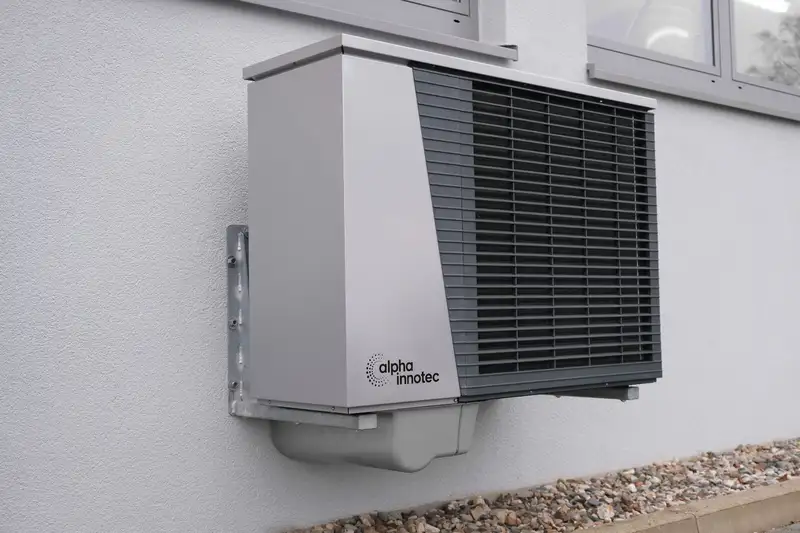
Standard grid-tied solar panels switch off during blackouts. Blackout protection is an add-on feature that's only available for systems that have a battery. This means that aside from the financial benefits, you might want to consider a battery as part of a blackout protection system.
Make sure to discuss blackout protection in detail with your installer ahead of time, as there are many different configurations and the level of protection you get depends on the details of the setup.

Solar improves your home's energy performance (BER)
A typical 7 kW solar panel system can keep around 1.3 tonnes of CO₂ out of the air every year by displacing fossil-fuel powered electricity generation.
This is reflected in the Building Energy Rating (BER) of a home: solar panels alone are often enough to lift the BER of a home by one letter grade. Check how much your BER would improve by going solar with our BER uplift calculator.
Solar panels are going mainstream in Ireland
1000s of Irish homes go solar and claim the SEAI solar panel grant each month.
Grant-aided home solar installations per year
Source: SEAI home energy grant data.
Solar panels in every county
See how your county compares for uptake of solar panel grants.
Display Metric
Map Scale
Solar panels as an investment
Solar panel installations typically pay for themselves within about 8 years, giving you zero-cost electricity beyond that point.
Solar also helps shelter you from wholesale electricity price spikes which get passed through to households and electricity bill increases.
The inverter is likely to need replacement once during the 25-year lifetime of the panels. The chart allows €1,200 for this at year 12.
See How Much Your Roof Could Generate
Find out if your roof is suitable for solar panels and get tailored quotes for your home.
Start My Estimate ➜Boost your savings with an electricity tariff tailored for solar
After installing solar panels, you'll import less electricity during the day. A larger share of your remaining usage lands at night. And you'll have a whole new consideration when choosing your electricity supplier: Export payments.
So the tariff that was the best deal before you had panels is likely the wrong one now.
Assumptions and calculation details
The cost and savings figures on this page come from a simplified model. For the numbers on your roof, use the calculators above and get firm quotes.
- Costs. €900 per kilowatt of panels plus €1,800 fixed for labour and standard equipment, the same figures used on the installation cost calculator. Panels at 450 W each. VAT at 0%.
- Generation. 913 kWh per year per kilowatt peak for South-facing panels.
- Prices. The calculator at the top of the page assumes that you choose the best electricity tariff for your situation, dynamic tariffs excluded. The calculation uses a simplified version of the logic from the main comparison tool.
- CO₂ savings. Based on 200 grams of CO₂ per kilowatt-hour round figure for Ireland's average electricity carbon intensity. That exact figure varies over time. Take it as a rough approximation, not a precise measurement. We apply it to the system's full annual generation (the electricity you use yourself plus the surplus you export) since each displaces a kilowatt-hour that would otherwise come from the grid.